
Offices and managed buildings
Regular cleaning can cover external glazing, entrance doors, internal partitions and accessible internal windows. Visits can be arranged to reduce interference with reception areas, meetings and normal working hours.
Serving Telford, England & surrounding areas
Mon–Fri 8am–6pm Sat 9am–2pm
Commercial window cleaning in Telford
Reliable scheduled cleaning for offices, shops, schools, managed buildings and other business premises, with each visit planned around access and working hours.
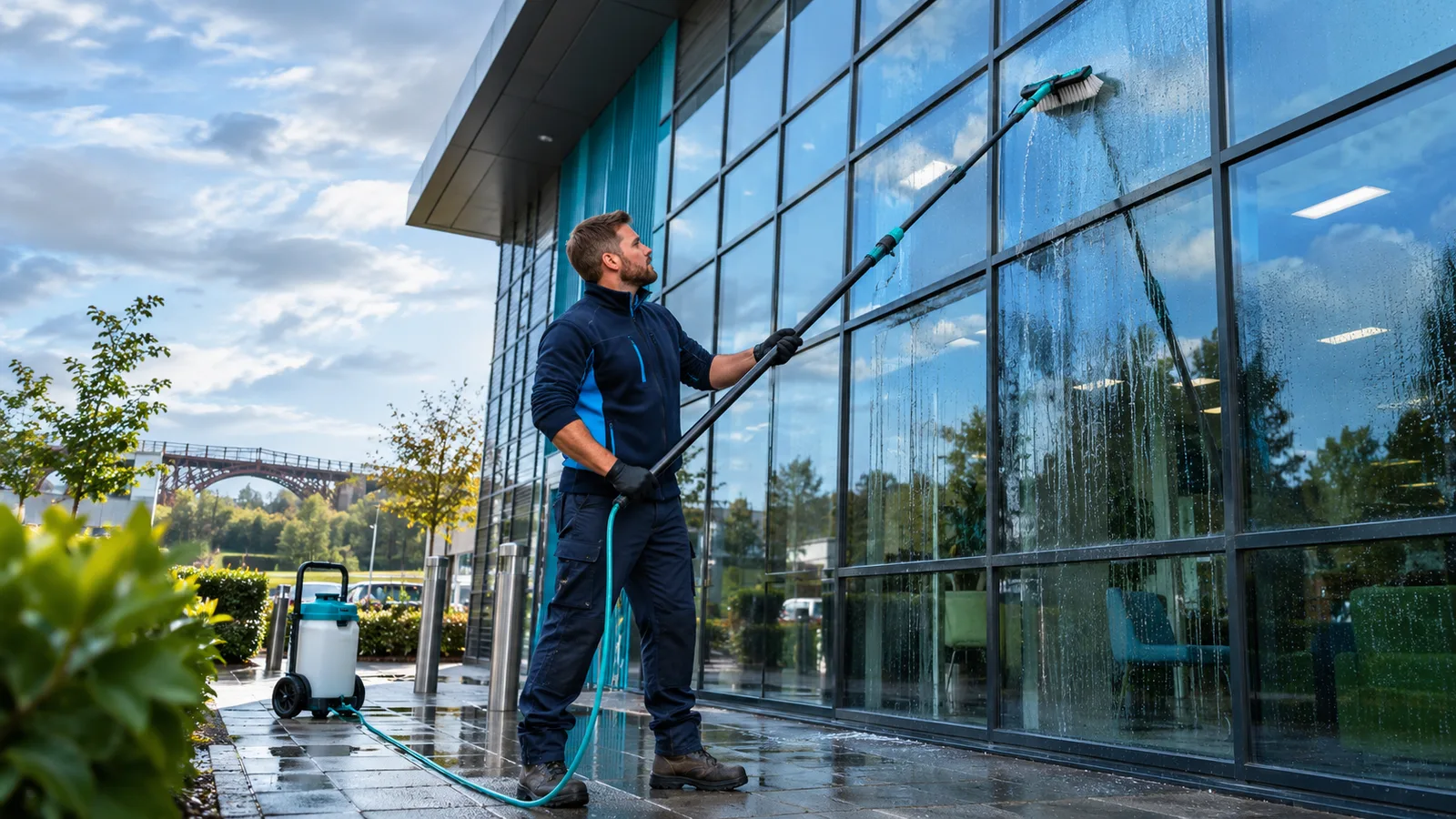
Commercial window cleaning in Telford helps your business maintain clear glass, clean frames and a professional appearance with minimal disruption to staff, customers or visitors. We provide planned and one-off cleaning for shopfronts, offices, schools, hospitality premises, communal buildings and commercial units.
We choose a practical method for your building. Ground-floor glazing may be cleaned with an applicator and squeegee, while purified-water poles can reach many upper windows safely from ground level. We also plan around loading areas, public entrances, car parks and other site activity.
We are a window cleaning company serving Telford homeowners as well as commercial clients who value reliable scheduling and communication. Before work begins, we agree the areas included, visit frequency and any essential access instructions, giving you a clear specification for future cleans.
Property fit
Regular cleaning can cover external glazing, entrance doors, internal partitions and accessible internal windows. Visits can be arranged to reduce interference with reception areas, meetings and normal working hours.
Fingerprints, traffic film and weather marks are particularly visible on shopfront glass. A planned schedule keeps display windows, glazed doors and signs of daily use under control.
Cleaning is planned around site access, safeguarding arrangements and busy arrival or departure periods. The agreed scope can include teaching blocks, offices and communal glazing where access permits.
Business parks and units often combine high-level windows with vehicle routes, loading bays and parked cars. Safe working space and suitable access are assessed before the cleaning method is confirmed.
Restaurants, cafés, hotels and leisure venues need presentable entrance glazing and minimal interruption. Timing can be agreed around service periods and customer footfall.
Shared entrances, stairwell windows and exterior elevations can be included in a repeat specification for landlords, agents and facilities managers.
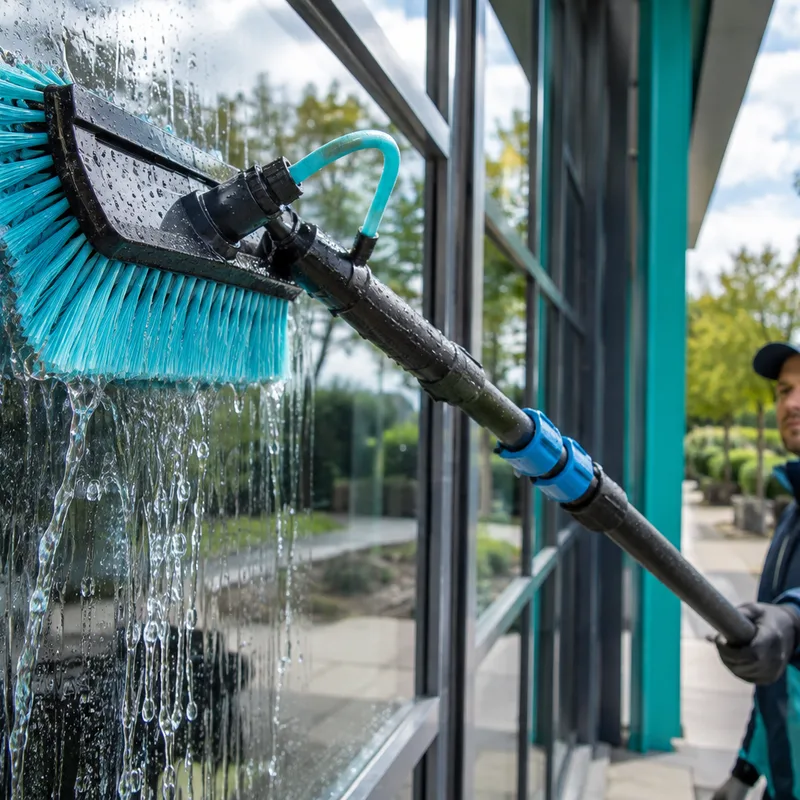
For suitable exterior windows, we use a water-fed pole to brush and rinse the glass, frames and edges with purified water. The glass then dries naturally, helping avoid the mineral residue left by ordinary tap water. This method lets us clean many upper windows safely from ground level.
Traditional applicator-and-squeegee cleaning is useful for interior glass, entrance doors, shopfront details and windows needing close control. We assess isolated deposits before using specialist tools because unsuitable blades or abrasives can damage coated or toughened glass.
Your specification will state whether frames, sills, doors and internal glazing are included. We also identify inaccessible or obstructed areas, while bird fouling, adhesive, paint, cement residue and heavy post-construction deposits may need separate treatment.
Booking and cleaning process
01
Tell us about the property type, approximate height, glazing areas, current condition and preferred frequency. Access restrictions and suitable working times should be raised at this stage.
02
The building is considered elevation by elevation. We identify suitable cleaning methods, pedestrian or vehicle movements, locked areas and any windows that need special arrangements.
03
The quotation sets out what will be cleaned and whether the work is one-off or recurring. Where relevant, it can distinguish exterior glass from internal windows, frames, sills and entrance glazing.
04
The team follows the agreed access instructions and cleaning method. Work areas are managed carefully around staff, customers, parked vehicles and deliveries.
05
Weather exposure, usage and the appearance expected by the business help determine the next visit. The schedule can be reviewed if the premises or access arrangements change.
Telford contains very different working environments. Retail and leisure premises around Telford Town Centre can have prominent entrance glazing and steady pedestrian activity, so cleaning times need to account for public access. Stafford Park has offices and commercial units where parked vehicles, service roads and loading activity can affect how exterior elevations are approached. Hortonwood and Halesfield include industrial estates with larger units, high windows and active yards, making access planning a central part of the job.
These conditions affect more than appointment time. A busy doorway may need short, controlled working areas, while windows facing a loading route may be cleaned outside delivery periods. Buildings with gated yards or controlled entrances need an authorised contact available. For recurring work, recording these details makes each visit easier to coordinate.
Rain does not automatically prevent exterior cleaning. Light rain may be workable when the ground remains safe and the result will not be compromised. High winds, lightning, ice or unsafe ground conditions can require a visit to be postponed. Seasonal pollen, traffic film, cobwebs and bird fouling can also change how long a clean takes and whether routine methods are sufficient.
Typical local pricing
Commercial window cleaning in Telford typically starts at about £25 to £60 for a small, accessible shopfront visit, while larger offices or multi-elevation premises may cost £80 to several hundred pounds per clean. These are general estimates, not fixed prices.
The final price depends on glazing quantity, building height, cleaning frequency, internal access, parking, ground conditions and whether frames or specialist deposit removal are included. Regular maintenance can be quicker than restoring heavily soiled glass. The exact cost is confirmed after the premises and required scope have been assessed.
Service standards
You should know which elevations, doors, frames, sills and internal areas are included. A written specification is particularly useful for facilities teams and multi-occupancy properties.
Purified-water poles and traditional tools each have appropriate uses. The choice should account for glazing type, condition, height and safe access.
Commercial cleaning should fit around opening hours, deliveries, school movements and customer traffic where reasonably possible.
Named site contacts, gate instructions and notice of access changes help prevent missed areas or delayed visits.
Hoses, poles and equipment need to be managed around doorways, paths, vehicles and work areas. Unsafe weather or access conditions should trigger a review rather than rushed work.
Tell us about your building, glazing and preferred schedule. We can define the work clearly and provide a quotation based on the actual access and cleaning requirements.
Call for a Free QuotePractical answers
The right frequency depends on the premises, exposure and the standard of presentation required. A customer-facing shopfront may need frequent attention because fingerprints and street-facing dirt are quickly visible, while some office or industrial elevations suit a longer interval. Premises around busy entrances in Telford Town Centre may need a different schedule from upper glazing on a controlled industrial site. After the first clean, the interval can be adjusted according to how the glass looks between visits.
Yes, many commercial windows can be cleaned during opening hours when access and public movement can be managed safely. Entrances, narrow paths and busy customer areas may be cleaned at a quieter time. At Stafford Park, Hortonwood or Halesfield, vehicle routes and loading activity may also influence scheduling. We agree practical access arrangements before the visit.
Internal windows and glazed partitions can be included when they are specified in the quotation. The work may require access to desks, meeting rooms or secure areas, so the premises should identify restricted spaces and suitable times. Sensitive equipment, paperwork and furniture may need to be moved back from the glass before cleaning.
Many upper-floor exterior windows can be cleaned from ground level with a purified-water pole system. Suitability depends on height, reach, setbacks, obstructions and safe ground access. Recessed glazing, balconies, canopies and unusually tall elevations may require a different assessment. The method is confirmed only after the building layout is understood.
Light rain does not always stop exterior window cleaning, but unsafe or unsuitable conditions can delay the work. High winds can make long poles difficult to control, while ice, lightning and slippery ground create avoidable risks. Shropshire weather can change quickly, so decisions are based on conditions at the premises rather than rain alone.
A useful quotation needs the premises address, building type, approximate height, glazing areas, requested frequency and whether internal glass, frames or sills are included. Photographs can help with an initial discussion, but complex sites may need an access assessment. Mention gates, parking controls, loading times, secure areas and any contamination such as paint, adhesive or bird fouling.
Builders' residue requires assessment and is not automatically part of routine window cleaning. Paint spots, labels, silicone, cement contamination and plaster can need specialist methods, and some deposits carry a risk of scratching or damaging coated glass. The pane type, manufacturer guidance and contamination should be checked before scraping or chemical treatment is proposed.
Tell us about your premises and the areas you want cleaned. We will recommend a suitable method and schedule, then set everything out clearly in your quote.